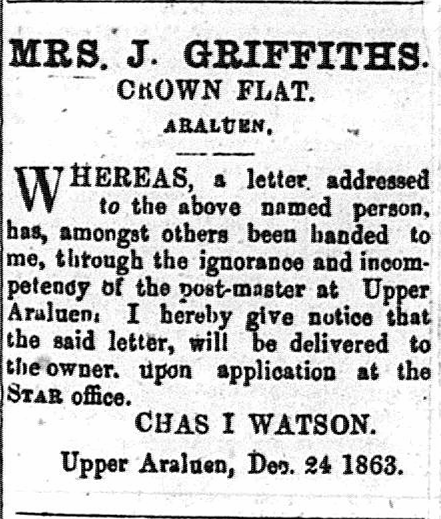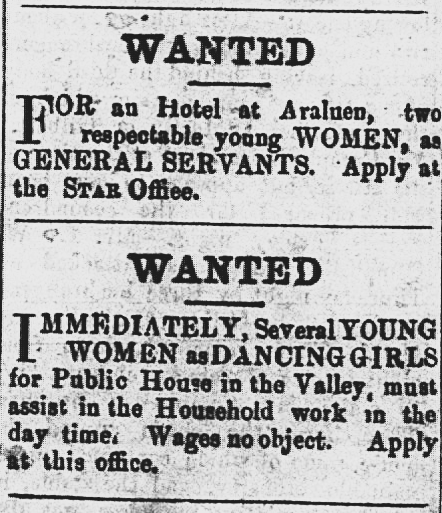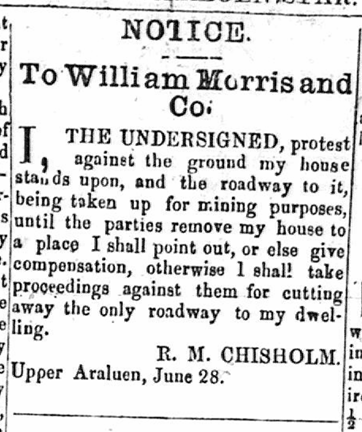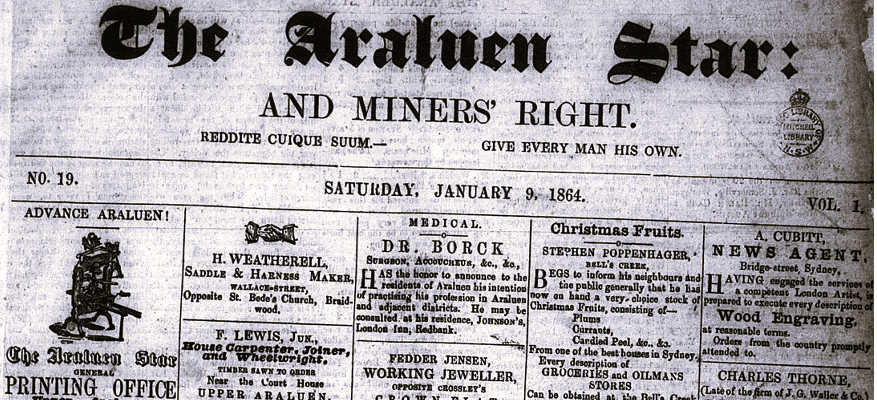
The preservation of the Araluen Star means the personal stories add depth and colour, bringing an understanding to life in the Valley in a way that dry facts and dates cannot. The Letters to the Editor, personal advertisements, and editorials provide insights into opinions, personalities, and interactions within the community, helping bring fresh insights into Araluen’s rich history.
History Week 2026 – Sunday, 13 September 2026
Every History Week, groups across NSW explore a shared theme. This year it’s Keeping Stories, how stories keep history alive, and what they tell us about ourselves. For Araluen, that story is the Araluen Star, our own local newspaper from the gold rush, and the extraordinary characters who leap off its pages when you actually go looking.
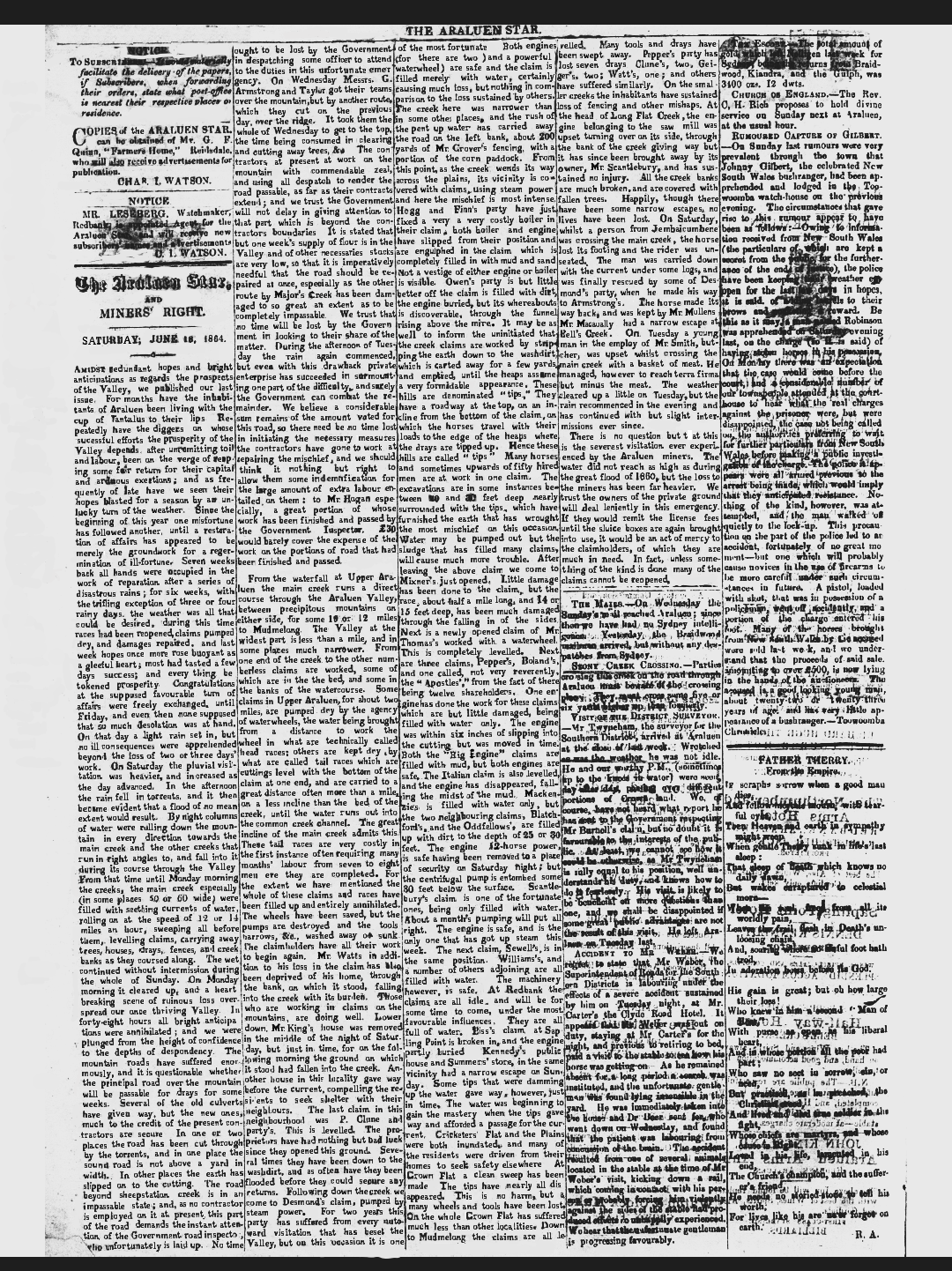
The Araluen Star and Miners’ Right was printed and published in the valley by Charles Isaac Watson, a pioneer journalist who went on to found several other regional papers, including the Braidwood Dispatch. It ran weekly for about two years, through 1863 and 1864, at the height of the gold rush. It reads as a genuine voice of the valley, unafraid to hold the police and the government to account when the roads were bad or the district was under-policed. For decades, the only surviving copy was a single microfiche reel at the State Library of New South Wales. Angela Casey spent hours there, scanning every page, and made prints and digital copies which she shared with the Araluen history group, as well as Brigid Whitbread, heritage librarian at QPRC. QPRC then worked with the National Library of Australia to have it published on Trove in a full-text online copy. The paper is now available to everyone: digitally on the Araluen Valley History website and on Trove, and in bound hard copy at Araluen, the Braidwood Museum, and the QPRC library.
So what’s actually in it? A handful of stories give a sense of just how much is here.
In June 1864, a catastrophic flood tore through the valley overnight. The Star called it ‘the severest visitation ever experienced’ by the district’s miners. Claims, tail races, houses, and sections of the mountain road were all swept away. Remarkably, no lives were lost. It’s arguably the single most significant local news event covered across the whole run of the paper, a detailed, first-hand account of a disaster that devastated the valley’s economy for months.
Colonial politics played out in Araluen too. In April 1864, Henry Parkes, having just lost the Braidwood by-election, visited Araluen and Redbank in person and delivered a lengthy public address to a crowd of around two hundred at the Peace and Plenty Inn, defending his record and attacking the sitting Legislative Assembly. One of the era’s great political figures, campaigning in the valley.
Then there’s the mystery man. A young pianist known locally only as Mr Brown died after a riding accident in April 1864. It was only after his death that the valley learned who he really was: the son of a Polish noble family, Baron von Wichesky. He was given an elaborate joint Odd Fellows and German Society funeral. A glimpse of just how cosmopolitan, and how full of secrets, the valley’s transient mining population really was.
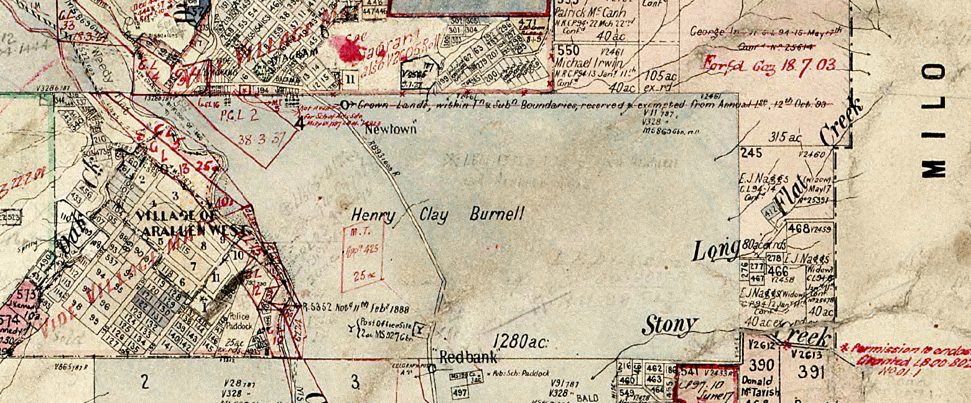
And sometimes the Star simply took a stand. In June 1864, Henry Clay Burnell — a substantial local landholder, as this 1867 village plan shows — published a lengthy, combative letter defending his claim to a disputed eight acres of Araluen land. The Star printed an equally pointed editorial reply, picking apart his arguments point by point. A rare surviving example of a full public argument between a newspaper and a powerful local landholder, conducted almost entirely in print.
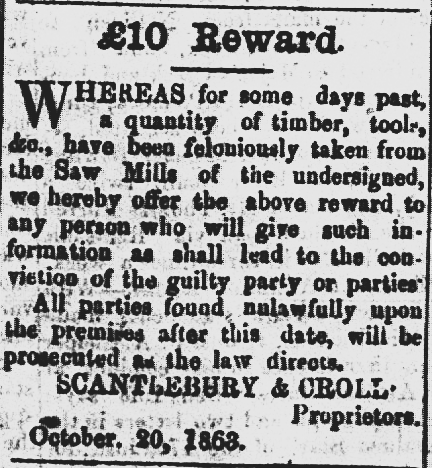
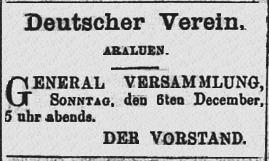
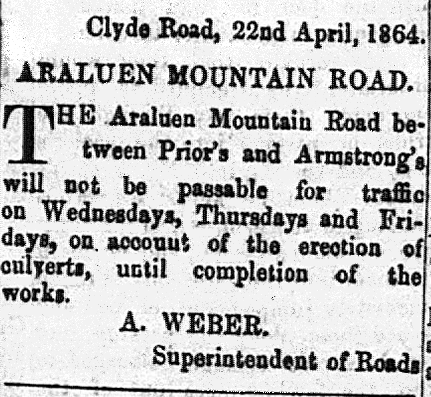
And in between the big stories, the advertising and small print: reward notices, road closures, the German club’s meeting notice, a public meeting about a new mining company. This is where you really get the texture of daily life on the diggings.
But of everything in the Star’s two-year run, one story keeps coming back to us.
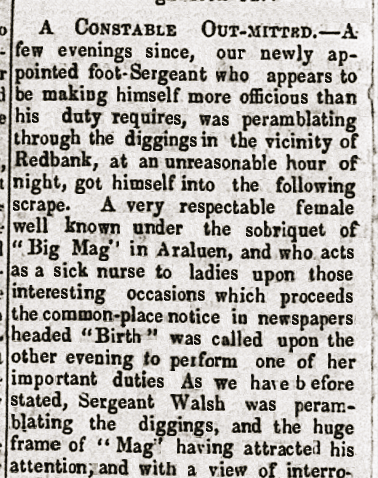
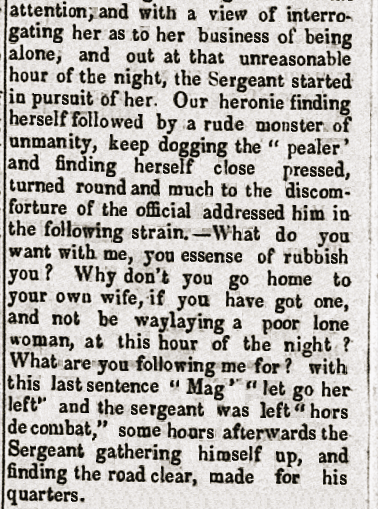
In Edition 4, 26 September 1863, the Star ran a story headed ‘A Constable Out-mitted’. A newly appointed foot-sergeant, out patrolling the diggings near Redbank late one night, spotted a large woman on her own and set off after her to find out her business. She turned on him: ‘What do you want with me, you essence of rubbish? Why don’t you go home to your own wife?’ And then, in the paper’s own words, ‘Mag let go her left,’ and the sergeant was left ‘hors de combat.’ It’s a wonderful story, but it raises real questions. It’s not an eyewitness account, and it’s written very much from Big Mag’s point of view, but not by her. Who was she really?
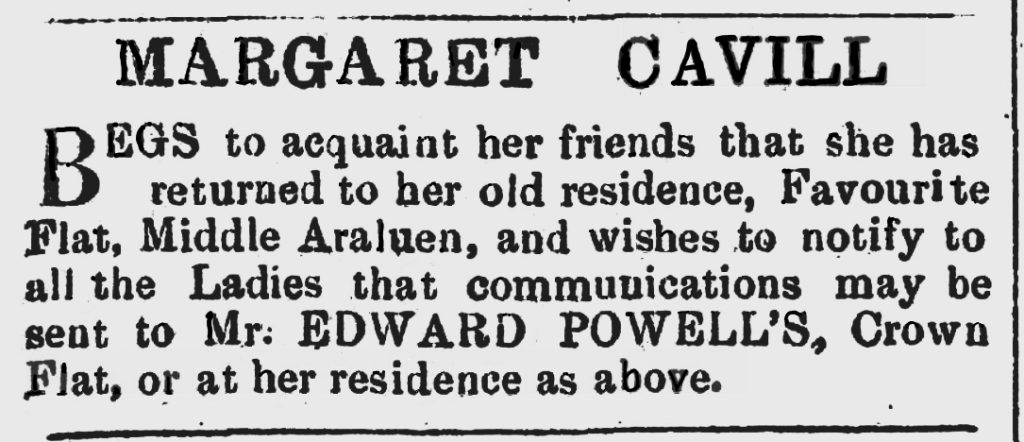
Contemporary accounts identify her as Margaret Cavill, a working midwife known locally as Big Mag, or the Araluen amazon. We even have Margaret advertising her own services. In March 1862 she let it be known she’d returned to Favourite Flat, and that messages for the ladies of the valley could be left at Mr Edward Powell’s, the Old House at Home public house, Crown Flat. A working woman, promoting her own trade, in her own words, in the local paper. So who was she, and how did she come to be known as Big Mag?
She’s outspoken, feisty, and quite possibly Irish. Margaret had real friction with at least one local man: in February 1862 she was convicted of abusive language against Henry Crossley, a butcher, and a few months later was accused of stealing his cloak, though the case fell away when Crossley said he’d be happy to drop it if she left the district. Two years later, in August 1864, she was charged with threatening a Dr Borck, warning him not to meddle with her calling of Rabbit catching — genuine period slang for midwifery. Dr Borck had, just months earlier, advertised his own services in Araluen as a Surgeon and Accoucheur, a male midwife, available for consultations at his residence at Johnson’s London Inn, Redbank. This wasn’t a random argument. It looks like a professional turf war between two competing birth attendants.
So why was she called Big Mag? Was she a genuinely large woman, or was it satirical, a small, feisty woman given an ironic nickname? We won’t know unless her family can be traced. And it raises bigger questions too: what do these stories tell us about the role of early midwives, in a male-dominated society? Did the Star’s readers, like us, simply enjoy watching someone from the fairer sex get the better of the authorities? Or was Big Mag’s story simply a good yarn — a tale worth printing because it was entertaining, not just because it was news?
Our research into Margaret Cavill continues. We’re chasing her maiden name through the NSW marriage records, and searching Trove under every plausible spelling of her surname, Cavill, Caval, Cavanagh. And it turns out she’s not the only person in the Star worth a second look: neither the constable who chased her, nor one of the men who took her to court, were entirely popular figures themselves. That’s a story for another day, and it’s all on our website for anyone who wants to fall down the same rabbit hole we did.
The Araluen Star gives us a real, unfiltered voice from the Valley at the height of the gold rush, court cases and dances and disputes between neighbours, alongside the extraordinary story of Big Mag. Preserving it means these personal stories can add depth and colour that dry facts and dates never could.